
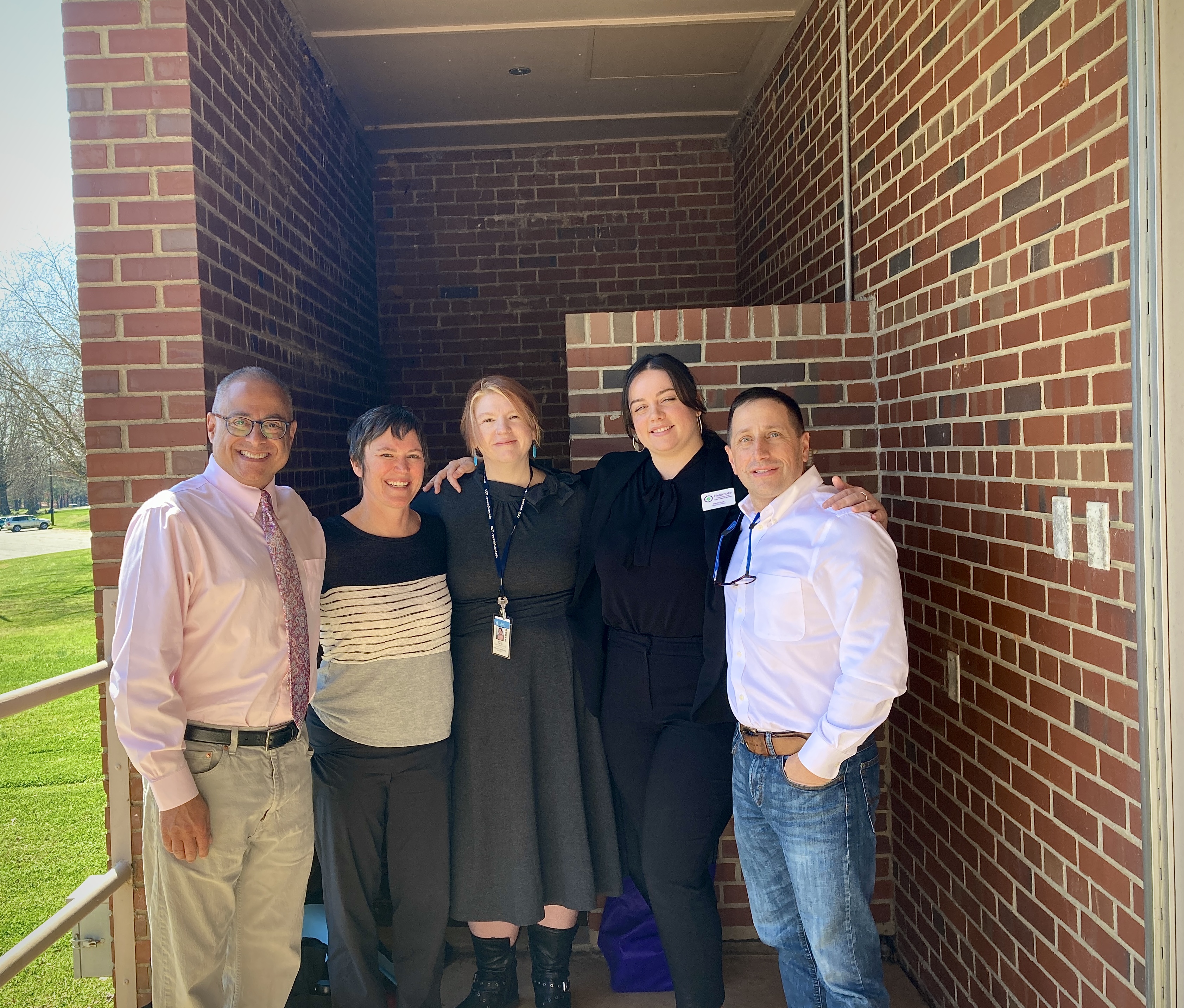
For context: Last fall I participated in a site visit at a domestic-violence service organization for a Buncombe County, North Carolina grant program I serve on. Toward the end of the visit I asked about the intersection of intellectual and developmental disability (IDD) and domestic violence and sexual violence and abuse. I asked the question because I understood the correlation to be high.
Still, the reported numbers were horrifying—beyond what anyone might even think possible.
For example, more than 80 percent of girls and women with IDD are sexually assaulted in their lifetimes. Half of those girls and women are sexually assaulted at least 10 times.
I determined to try to do something to reduce the violence, and I saw a pathway for tangible impact beyond just talking about it, starting in North Carolina and hopefully then having some positive impact around the country.
I turned to people with expertise in interpersonal violence—Mikaila Mills, who also has rich experience in working with intellectually and developmentally disabled people, of Impact Health and Caitrin Doyle of Helpmate—and with a lot of back and forth over some months, relied on their experience, insight, and then partnership to formulate a plan of goals and actions that we could try to move forward and get done. The Arc of the United States—and Leigh Anne McKingsley, specifically, who has worked to reduce interpersonal violence in the U.S. IDD population across her career—provided valuable resources.
First, Caitrin presented information about interpersonal violence to the Vaya Health Consumer and Family Advisory Committee (CFAC) that I serve on in Western North Carolina.
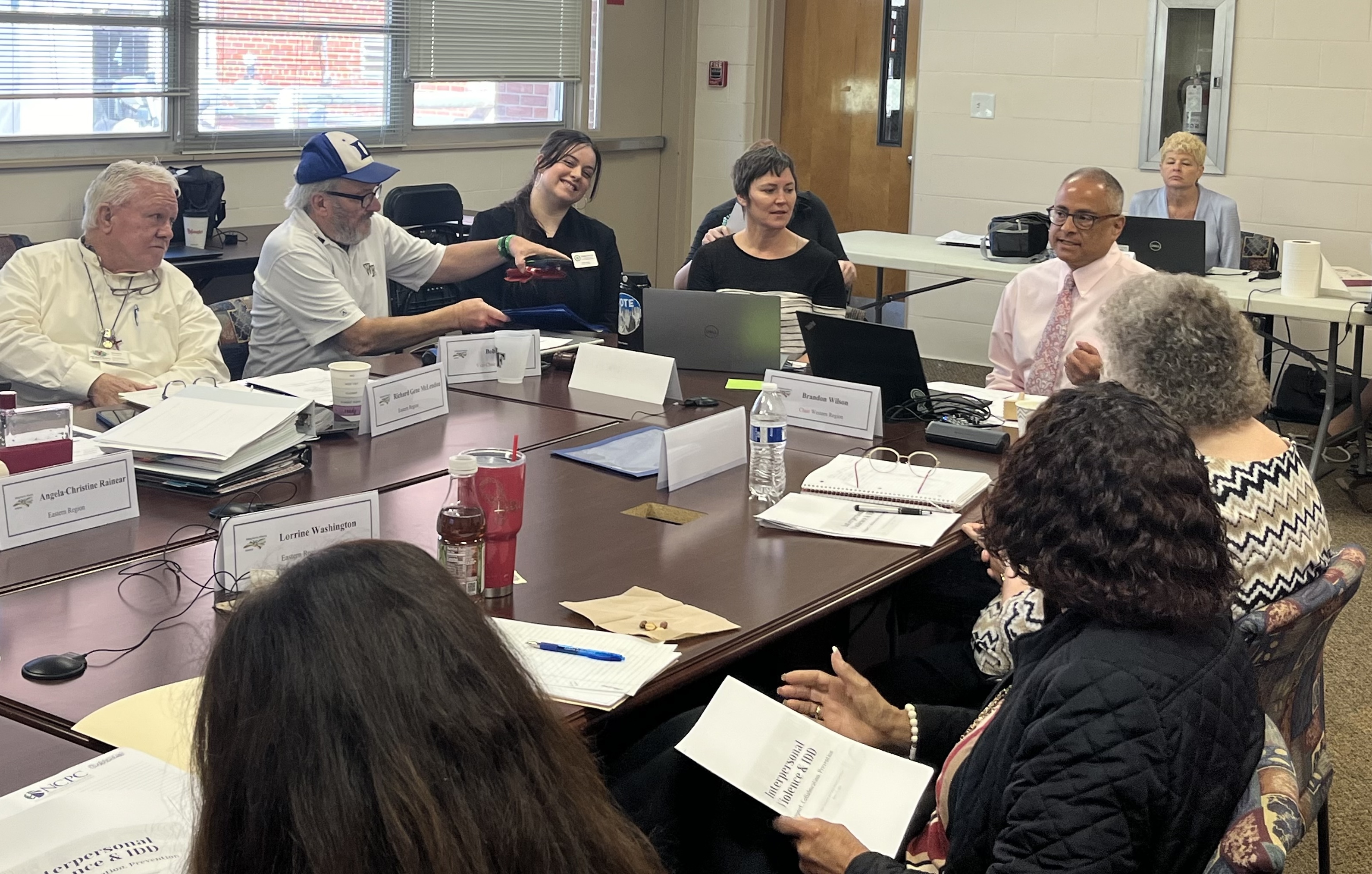
Then, Mikaila, Caitrin, and I presented the working version of our proposed goals and actions in Raleigh to the North Carolina State CFAC, which advises the N.C. Department of Health & Human Services (DHHS) and the N.C. Legislature about planning and policy for developmental disabilities, as well as for mental health, substance use, and traumatic brain injury services in the state.
Without naming them without permission, I also communicated with some North Carolina DHHS leaders, and I was pleased by how receptive and positive they were—recognizing the urgent need in this area and wanting to make a real difference.
To the credit of the entire State CFAC and its dynamic chair Brandon Wilson, recommendations for reducing interpersonal violence in IDD were included in July as part of the Committee’s 2024 State CFAC Annual Report. You can see how they were presented as Recommendation 9 in multiple parts on pages 45-49.
Then, building on that, the North Carolina DHHS Division of Mental Health, Developmental Disabilities, and Substance Use Services and its Director Kelly Crosbie released their 5-year Strategic Plan 2024-2029 in September. On page 22, with a typo in the header that I have been told will be corrected (and now making that correction here), DHHS included as a “Future Focus” addressing interpersonal violence (IPV) in this way:
Interpersonal Violence (IPV): Require that all I/DD service providers complete a mandatory annual training on IPV prevention, and make available an accessible curriculum with IPV prevention, healthy relationship, and sexual health information for people with I/DD and their families. Build reciprocal resource and referral partnerships between I/DD providers and IPV providers.
Now we are making the recommendations we proposed—as we proposed them—publicly available in this post, so we can point advocates and people working in IDD and IPV around the country to them and engage and collaborate with everyone about what is and isn’t working. Reducing violence means trying, learning lessons, making improvements, and trying more. With such incredibly high and awful rates of traumatic, devastating violence and abuse against people with intellectual and developmental disabilities, violence reduction is urgent—now.
It won’t be stopped now, not yet. It is too pervasive. But it must be reduced, sharply, now.
Anything less than our full commitment to urgent action indicts our individual and societal consideration of the value and even the basic humanity of intellectually disabled people.
That’s true in North Carolina, where “Future Focus” just isn’t good enough. And it’s true everywhere in the country.
We must take action now to stop sexual assault and domestic and caregiver violence against intellectually and developmentally disabled people.
Join us, and please tell us in the comments about the actions you are taking to reduce interpersonal violence in your community and state—and in the country—as well as the impacts you are having and the lessons you are learning.
Recommendation: Interpersonal Violence and Intellectual and Developmental Disability (IDD)
Implement a robust, comprehensive plan to reduce Interpersonal Violence in the IDD population and track outcomes.
Interpersonal Violence (IPV) is an umbrella term encompassing sexual violence as well as domestic, intimate-partner, family, caregiver, and community violence. IPV can include physical, sexual, psychological, and emotional abuse, as well as neglect and deprivation.
People with intellectual and developmental disabilities (IDD) are at risk of IPV at significantly elevated rates compared to almost all other demographic populations:
- People with IDD are sexually assaulted at a rate at least 7 times the rate of people without any disability (Citation 1)
- 83 percent of women and girls with IDD are sexually assaulted during their lifetimes—and half of those women and girls are sexually assaulted more than 10 times (2)
- Approximately 30 percent of men with IDD are sexually assaulted (3)
- 41.9 percent of sexual assault cases involve someone with a cognitive disability (4)
- Children with disabilities are three times more likely than children without them to be victims of sexual abuse—and the likelihood is even higher for children with intellectual or mental-health disabilities (5)
- Sexual violence disproportionately impacts the IDD LGBTQ+ commmunity, which has even greater challenges disclosing victimization or reporting crimes, with trans and nonbinary intellectually and developmentally disabled people facing even higher rates of sexual violence (6)
- An estimated 70 to 85 percent of cases of abuse against adults with disabilities go unreported (7)
People with IDD face significantly elevated risks of sexual assault. However, reporting such abuse is filled with challenges due to a lack of adequate training for service providers; a lack of accessible services; societal biases about IDD, which includes questioning the credibility of intellectually and developmentally disabled survivors; and the risk of retaliation from abusers, who sometimes are caregivers and very often are known to and trusted by victims.
Additionally, intersections between IDD and mental-health and substance-use-recovery needs and traumatic brain injury create further challenges for survivors. IPV-exposed individuals are at heightened risk of substance-use disorders and brain injury, exacerbating cycles of abuse and risk of revictimization. Survivors often have an increased need for mental-health services and support. Most service providers lack adequate training to address these complex issues, leaving intellectually and developmentally disabled survivors facing deep systemic barriers.
North Carolina lacks a concerted strategy for reducing IPV and the trauma and harm it causes in our IDD population.
We recommend the Department adopt a multi-pronged strategy for reducing IPV among people with IDD and that this strategy focus on three significant steps:
- requiring that all frontline IDD service providers and their supervisors complete a mandatory annual training on IPV prevention and healthy relationships
- making available an accessible curriculum with IPV prevention, healthy relationship, and sexual health information for people with IDD and their families
- requiring collaborative engagement and relationships of IDD provider agencies with IPV providers and networks in reciprocal resource and referral partnerships
We also recommend the Department track outcomes as these steps are implemented.
By doing so, we can create a more secure and empowering environment for people with IDD in North Carolina. Training staff to handle complex situations better may enhance job satisfaction and performance. Trauma-informed practices will foster greater trust with clients and promote a safer environment. An accessible healthy-relationship and IPV-prevention curriculum will better equip people with IDD with the understanding, knowledge, and skills to build healthy relationships and identify and prevent potential abuse and harm. And partnerships between IDD agencies and IPV agencies will ensure victims have access to specialized support services.
A well-trained workforce, accessible prevention information, and strong partnerships with IPV service providers are crucial steps toward dismantling the cycles of silence and violence and promoting greater safety and justice for people with IDD.
First, we recommend the Department require that all frontline IDD service providers (including Direct Support Professionals [DSPs]/care workers, Qualified Professionals [QPs], care managers, care-manager extenders, and care coordinators) complete an annual minimum 2-hour training that includes:
- Understanding healthy relationships and sexual health
- Understanding the forms and dynamics of IPV and the cycles of abuse
- Identifying the signs and symptoms of IPV, including abuse by caregivers and/or staff
- Learning trauma-responsive practices to support survivors appropriately
- Learning how to make an effective referral to IPV resources and supports
Second, we recommend the Department require that all IDD providers offer consumers and family members or guardians an accessible IPV prevention curriculum, including information addressing healthy relationship dynamics, communication, and sexual health. We recommend the curriculum be made available in multiple formats (including easy-to-read text, audio recording, and visual aids/picture-assisted, as well as in Spanish language) to cater to diverse communication and learning needs and styles.
Third, we recommend the Department require that all IDD providers establish a reciprocal partnership with at least one IPV service provider to ensure effective responses to IPV referrals from IDD provider agencies; to help IPV organizations develop curriculum, resources, and programming that are accessible, tailored for people with IDD, and responsive to individual needs; and to ensure IPV-organization staff training is IDD-informed—all ensuring a coordinated, comprehensive approach to IPV prevention and response.
We recommend tracking and reporting transparently the implementation of these steps, including:
- tracking the number of IPV incidents, reports, and referrals submitted
- collecting and tracking feedback from frontline IDD service providers and their managers about their satisfaction with the IPV prevention and healthy relationships training and their perception of knowledge gained and its usefulness
- tracking the number and percentage of consumers and family members or guardians receiving the prevention curriculum
- collecting and tracking feedback from consumers and family members about their satisfaction with the curriculum provided and their perception of knowledge gained and the curriculum’s value
- monitoring the number of partnership agreements between IDD and IPV providers
With this information, improvements to implementing these recommendations can be achieved over time to further reduce IPV in North Carolina’s IDD population.
We encourage the Department to work with IPV associations including the North Carolina Coalition Against Domestic Violence (NCCADV) and the North Carolina Coalition Against Sexual Assault (NCCASA), as well as other IPV organizations and stakeholders, to meet these recommendations.
We recommend this recommendation be implemented in its entirety by May 1, 2025.
Citations
1 – Abused and Betrayed (2018), NPR, https://www.npr.org/series/575502633/abused-and-betrayed
2 – T.C. Weiss, People with disabilities and sexual assault (updated 2023), https://www.disabled-world.com/disability/sexuality/assaults.php
3 – T.C. Weiss, People with disabilities and sexual assault (updated 2023), https://www.disabled-world.com/disability/sexuality/assaults.php
4 – Talk About Sexual Violence (2017–2023), The Arc of the United States, https://thearc.org/wp-content/uploads/2023/11/Talk-About-Sexual-Violence-Final-Report-2023.pdf, page 8
5 – Sexual Abuse of Children with Disabilities (2013), Vera Institute of Justice, https://www.vera.org/publications/sexual-abuse-of-children-with-disabilities-a-national-snapshot
6 – Talk About Sexual Violence (2017–2023), The Arc of the United States, https://thearc.org/wp-content/uploads/2023/11/Talk-About-Sexual-Violence-Final-Report-2023.pdf, page 8
7 – Domestic Violence and Disabilities (2017), National Coalition Against Domestic Violence (NCADV), https://drive.google.com/file/d/1udt0aeq3lxwAkjQoBxJjW7GZQEJyrcwh/view
Thank you for visiting, and I invite you to leave comments directly on this post or to reach out to me using the website’s contact form.
You can connect to articles I’ve written about autism, intellectual disability, and disability here: Autism & Disability Articles.
