
I was interviewed by phone for an hour by The Washington Post reporter Caitlin Gibson for a feature article that ultimately ran on Sept. 27 titled: Families push back on Trump’s autism rhetoric: “We’re not a disease.” (The Post has a paywall, but click through if you’re a subscriber or, theoretically, if it’s your first click-through of the month. Alternately, I have the article saved as a rather large PDF, so if you want to read it, send me a note.)
I thought Caitlin did a good, professional job with the piece. I especially appreciated that she interviewed two autistic parents of autistic children. (My son, Nicholas, is 25 and autistic, and I am not autistic.) My contributions to the piece are at the end, and my perspective is a little different from all the other parents interviewed.
Noting this afterward, Caitlin offered me the opportunity to write something that elaborated on the points I was trying to make in our conversation or that reflected thoughts that ultimately couldn’t be included due to the focus and size limitations of the piece.
So I wrote one elaboration and one extension, basically, and now I’m sharing them here for you. Both items may be slightly controversial during this fraught time, so feel encouraged to respond in the comments.
First a relevant extract from the article by Caitlin, with some paragraph breaks added:
Failures of systemic support have persisted for decades, says Ray Hemachandra, the father of an autistic 24-year-old son, Nicholas, in North Carolina.
“We’ve been under-serving people with autism and people with intellectual and developmental disabilities through Democratic and Republican administrations alike,” he says.
He feels that some perceptions of social progress have been exaggerated—and though he strongly disagrees with Trump and Kennedy, he says they are exposing something important about the mainstream perception of autism: “This harmful rhetoric is bringing out into the open what is true, and what we’ve been in denial about: The ‘cure’ model remains the dominant model. We’ve just been pretending it’s not.”
To Hemachandra, these developments feel like an inflection point.
“This moment challenges us to have the language to better educate and inform people. What is our vision? What if we’re proactive rather than reactive?” he says. “And if we can rise to this moment, then the future possibility could be much greater than where we were, because we were stuck where we were.”
The future he wants, he says, is one where autistic people are not pressured to hide themselves, to minimize the appearance of autism.
He wants people like Nicholas, who has high support needs, to be seen as equally essential and valuable. Hemachandra wants parents to be free of the stigma that leads so many to grieve when their child receives an autism diagnosis.
“The truth is they grieve for an imaginary, wished-for child, rather than accepting and celebrating the real child they have,” he says.
“But my son, for example, isn’t a burden to our community. He is a gift to it, and he is a contributor to it.”
A little follow-up
Here is the addendum I wrote after the article published:
I appreciate Caitlin Gibson’s smart, diligent reporting. I’d like to add, or at least further emphasize, two primary points.
First: The prevalence of “autism acceptance” celebrations and campaigns obscures the fact that, for many autistic people, much of the country remains unaccepting. Autism and autistic children and adults are more commonly misunderstood than understood. Support services in most places in the United States remain far too costly, inaccessible, and frequently inadequate and even inappropriate for autistic children and adults.
Most therapeutic and educational approaches still try to make autistic people become non-autistic. The approaches are often framed more positively now than they once were, but the underlying intention is unchanged. They still reject autistic people as they are. They are still pounding a round peg through a square hole and trying to make it become square—or at least square-passing. The common language around “autism acceptance” belies this enduring truth.
According to The Arc of the United States, more than 700,000 children and adults with significant intellectual and developmental disabilities languish on waitlists across the United States for Medicaid waivers and support services. Many of these people are autistic. Our astonishing, discriminatory failure of support for these disabled Americans was true before the Trump Administration took office.
Autistic and other intellectually and developmentally disabled adults are far too commonly at risk. They are more likely to live in poverty, to be homeless or housing-insecure, to be food-insecure, to have difficulty accessing employment opportunities, to have fewer social connections, and consequently to have behavioral health—mental health and substance-use disorder—co-occurring conditions.
Many autistic children fail to receive the support that they are legally entitled to from schools for a free and appropriate—and least restrictive—public education under the Individuals with Disabilities Education Act, or IDEA. Schools commonly approach disabled children’s support needs with denial and adversarialism.
In recent decades, we have seen some societal improvements for autistic people and other people with intellectual and developmental disabilities, to be sure. But our continued failures precede this Administration and transcend it. Governmental officials of both parties mostly deprioritize intellectually and developmentally disabled Americans in their budget and spending choices.
Autistic people receiving support services are fearful of potential reductions in those services from federal budget cuts to Medicaid spending, certainly. I share that fear for my adult son, who is autistic and intellectually disabled, and for people like him. But for hundreds of thousands of people on decades-long waitlists for Medicaid waiver services, there is nothing there to cut—although they may receive some other government benefits that are also at risk.
We don’t serve autistic children or adults well by pretending that everything was so great for the population before the Trump Administration. It wasn’t. But concern about autistic people’s well-being only seems to rise to a level of public outrage when there’s an explicit partisan framing, which makes it seem to me to be more performative than genuine, substantive, and—likely—lasting and impactful.
Second: One of most common responses to this White House’s statements about autism has been that the Administration is falsely distorting the nature of the increase in autism diagnoses.
People say that the expansion of the autistic population has occurred due to increased diagnostic awareness and, explicitly, that the Administration is framing this as tragic by mischaracterizing the increase of autism diagnoses as primarily involving people with higher support needs. Sometimes they describe people with these higher needs as having “profound autism” or “profound intellectual disability.”
But there is no tragedy or crisis, they say, because the diagnostic increase is happening in what was once called the Asperger’s population—autistic people with lower support needs, but who still need understanding, acceptance, and perhaps some accommodations.
Such arguments throw autistic people with higher support needs generally—or with co-occurring intellectual disability or physical disabilities specifically—under the bus.
Their lives are no less precious and meaningful than anyone else’s, including both autistic people and non-autistic people with lower support needs. Their lives are not tragedies unless we make them so.
That rhetoric in response to the Trump Administration has been at least as harmful—as pernicious and narrow-minded—as what’s prompting it, and maybe more so, because it’s coming from presumed allies who implicitly are positioning intellectually disabled people as “less than.”
The truth is if an autistic, intellectually disabled child is born to someone who views that as a tragedy, then it often becomes one. But if a nonautistic, non-intellectually disabled child is born to that same parent, that’s hardly better. Because cycles of intolerance, prejudice, and stigma might be perpetuated.
Autistic people and other intellectually and developmentally disabled people with higher support needs are as important, valuable, and lovable as anyone else. We need a far more steadfast and nonpartisan commitment to them—within families and communities and as a country—if we are to break these enduring cycles of hostility and harm toward autistic and intellectually disabled Americans and if we are to envision and create a much brighter future for them and for us all.
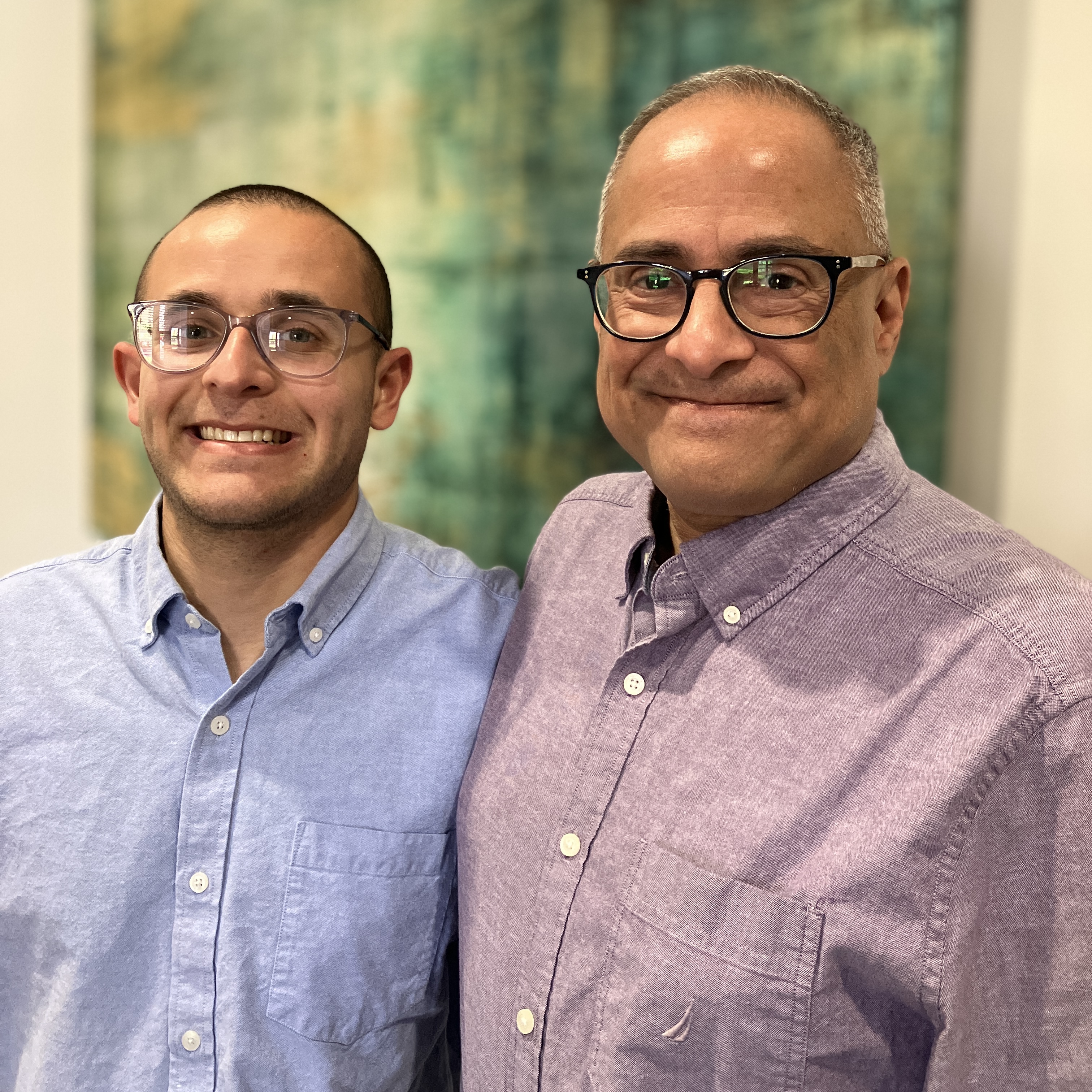
Photo credit: The featured article image of Nicholas Hemachandra and Ray Hemachandra was taken by our friend Gavin Young.
Thank you for reading this piece and sharing it out. I invite you to leave a comment in reply—and also to read other pieces about autism and intellectual disability, including:
- Autism Acceptance—and Celebration
- Autism Adulthood: Caring for the Future and the Present Moment
- Definition as Destiny: Breaking Autistic Boundaries
- Accept or Reject: Part one of a series on autism value contrasts
- No “Because” but Love—Intellectual Disability, Identity, Representation, and Value
- Autism and IDD: Caregiving, Advocacy, Community and Love
- Poppa, Do You Have Autism?
- Hammer and Screw: Autism Acceptance and Rejection
- On Blackness and Autism, Identity and Essence
- 7 Values to Live By: Autism Across Schools and Classrooms
- Autism 101: Hating Your Autistic Child
- Autistic Isolation, Connection, and Joy
- My Talk at the Disability Day of Mourning
